
Modernizing Rail Spill Response Planning via SharePoint Online
Client Overview
A transportation safety agency, through its contracting authority, required a secure and responsive SharePoint solution to support its rail-related oil spill response planning efforts. Operating within a high-compliance environment, the agency sought to modernize internal workflows, enable multi-stage review coordination, and improve response readiness through structured digital systems. The solution needed to align with stringent DOE standards while remaining intuitive for reviewers across multiple internal teams.
| Client: | Transportation Safety Agency
|
| Industry: | Transportation & Emergency Response |
| Technology: | Microsoft SharePoint Online, PowerApps, Power Automate |
| Project Scope: | SharePoint modernization for a transportation safety agency’s Rail Spill Response Planning, including automated workflows, custom forms, metadata configuration, and digital clearance systems. |
| Size: | National-level regulatory system used for internal plan reviews and coordination across multiple transportation safety agency review teams and offices. |
Project Scope
A transportation safety agency required a modernized SharePoint solution to streamline its internal rail spill response planning and review processes. The project focused on digitizing multi-stage review workflows, enhancing data visibility, and automating documentation and clearance procedures.
Key objectives included:
- Designing custom PowerApps-based forms to support primary, secondary, and resubmission reviews.
- Implementing workflow automation using Power Automate to eliminate manual routing delays and generate response letters.
- Structuring SharePoint Priority Tables and metadata to support real-time status tracking and reviewer assignments.
- Ensuring compliance with IT security and operational standards, while enabling flexibility for future program expansion.
Project Overview
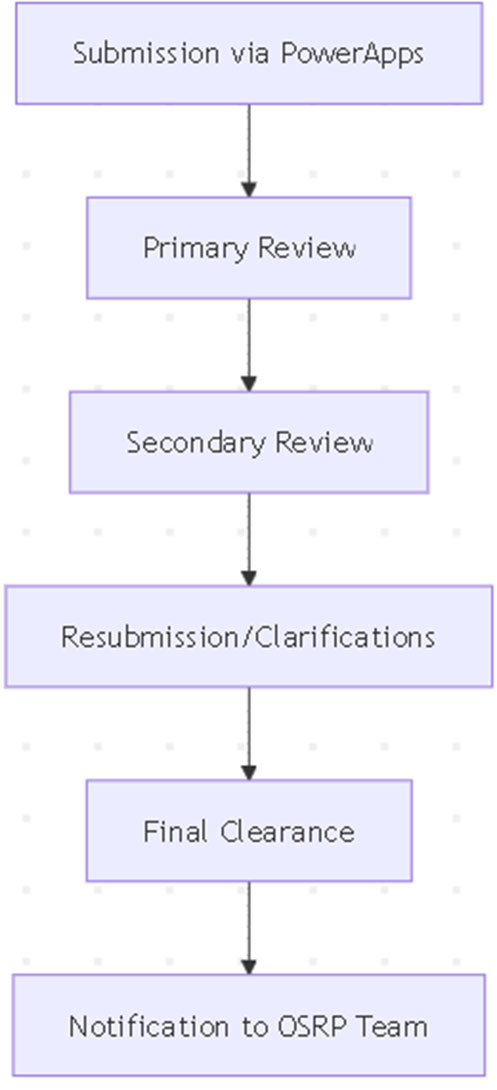
Diagram 1: High-level automation of the Transportation Safety Agency’s multi-stage OSRP review process using SharePoint Online.
Zirlen Technologies collaborated with the Transportation Safety Agency to design and deploy a tailored SharePoint-based system to manage the review and clearance of rail-related Oil Spill Response Plans (OSRPs).
The initiative included:
- Developing customized PowerApps forms to support all review stages, from initial submission to final clearance.
- Creating automated workflows using Power Automate to generate review letters, assign tasks, and update status in real time.
- Structuring and integrating Priority Tables to consolidate metadata, form responses, and tracking logic.
- Enhancing SharePoint security, permissions, and compliance to align with DOE and Prime Contractor operational standards.
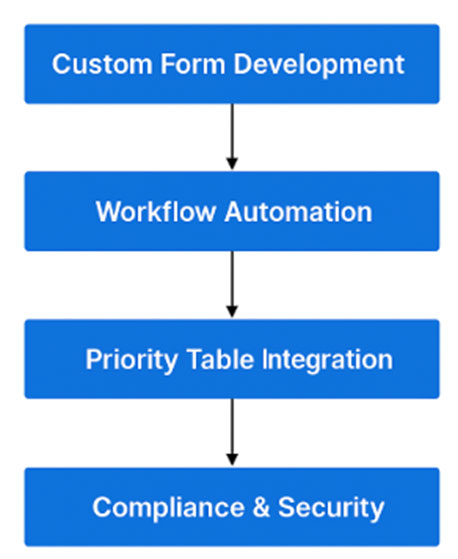
Diagram 2: The flowchart illustrates the modernization initiative for the Transportation Safety Agency’s rail spill response planning, managed via SharePoint Online
This diagram illustrates the overall Transportation Safety Agency’s SharePoint modernization initiative:
- Custom Form Development – Digitizing OSRP review templates for primary, secondary, and final stages.
- Workflow Automation – Driving multi-step approvals, response letter generation, and reviewer alerts.
- Priority Table Integration – Centralizing key plan data, reviewer input, and response status.
- Compliance & Security – Ensuring DOE-grade protection, audit trails, and access controls.
Technical Implementation – SharePoint Modernization for the Transportation Safety Agency
✔ Automating Rail Spill Response Planning Using SharePoint Online
Zirlen Technologies developed and deployed a cloud-based SharePoint Online solution to support the Transportation Safety Agency’s rail spill response planning operations. Designed to streamline multi-stage plan reviews and enable faster decision-making, the system modernized what was previously a manual, document-heavy process. Built within a Prime Contractor-managed environment, the solution aligns with both the Transportation Safety Agency’s operational standards and DOE-hosted infrastructure policies where applicable.
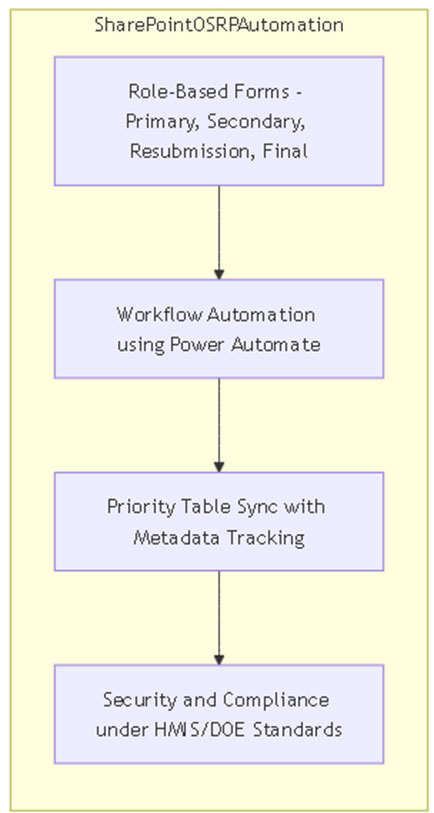
Diagram 3: Automating Rail Spill Response Planning Using SharePoint Online
The solution enabled the Transportation Safety Agency to:
- Digitize OSRP workflows with tailored PowerApps forms supporting Primary, Secondary, and Resubmission reviews.
- Automate approvals and documentation, including real-time updates to SharePoint lists and dynamic generation of review letters.
- Enhance data quality and auditability by linking form responses to a centralized Priority Table with role-based inputs.
- Meet Prime Contractor and DOE hosting requirements, while staying aligned with the mission of the U.S. Department of Transportation.
Technology Stack & Microsoft 365 Resources
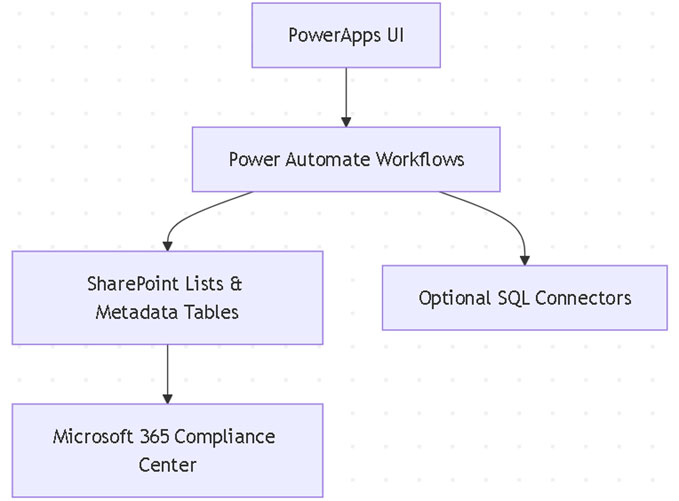
Diagram 4: Layered architecture stack used in the Transportation Safety Agency’s review workflow platform.
The implementation leveraged Microsoft’s modern cloud suite to ensure agility, maintainability, and long-term compatibility:
- Frontend: PowerApps – for responsive, permission-based forms used across review stages
- Backend: Power Automate – to orchestrate workflow logic, document generation, and escalation alerts
- Data Layer: SharePoint Online Lists – structured repositories for form inputs, review status, and metadata
Cloud Infrastructure:
~ Workflow & Process: Power Automate for sequential logic, triggered correspondence, and task assignments
~ Collaboration & Alerts: SharePoint Groups, Contact Lists, and embedded notifications
~ Governance & Security: Compliance with Microsoft 365 tenant-level controls managed under Prime Contractor, conforming to DOE infrastructure standards
~ Optional Extensions: Integration hooks for SQL-based data storage and reporting (if needed in future phases)
Challenges & Solutions
Challenge 1: Manual, Fragmented Review Workflows
The Transportation Safety Agency’s rail spill response planning involved multiple review stages: Primary, Secondary, Resubmission, and Final, managed manually via email, spreadsheets, and static document versions. This led to inconsistent tracking, unclear responsibilities, and version control issues.
Solution:
- Zirlen designed and implemented structured, role-based PowerApps forms for each review type, replacing unstructured inputs.
- Introduced workflow automation to eliminate manual routing, flagging, and approvals.
- Integrated a centralized Priority Table in SharePoint Online to track plan statuses, key data points, and reviewer assignments in real time.
Challenge 2: Limited Visibility and Delayed Clearance Communication
Coordinating multi-level reviewers across the Transportation Safety Agency and Prime Contractor stakeholders resulted in delayed feedback loops, unclear correspondence flows, and missed notifications, especially at the final clearance stage.
Solution:
- Built automated email triggers and task assignments using Contact Lists and Power Automate.
- Developed a dedicated Correspondence Form that streamlined final review signoffs and notified the OSRP executive assistant upon clearance.
- Established a clear audit trail across SharePoint lists for reviewer activity and plan movement.
Challenge 3: Security, Compliance, and Hosting Constraints
Since the solution operated within the Prime Contractor-managed Microsoft 365 tenant (tied to DOE infrastructure), the implementation had to meet rigorous compliance, access control, and documentation standards.
Solution:
- Configured granular SharePoint permissions, ensuring role-based access for the Transportation Safety Agency reviewers while complying with Prime Contractor/DOE policies.
- Ensured all workflows and data storage conformed to security best practices and internal audit readiness.
- Provided detailed documentation on architecture, workflow logic, custom components, and branding for future audits or enhancements.
Process of Integration for Rail Spill Response Workflow Modernization at the Transportation Safety Agency
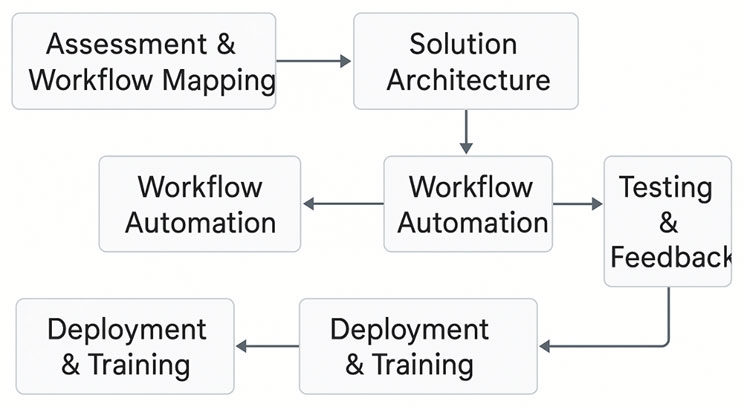
Diagram 5: End-to-end process from assessment to final rollout and training
- Initial Environment and Workflow Assessment
Zirlen began with a comprehensive review of the Transportation Safety Agency’s existing SharePoint environment and manual OSRP review processes.
- Evaluated legacy forms, email-based routing, and document handling protocols.
- Identified inefficiencies in review tracking, handoff delays, and lack of centralized status visibility.
- Assessed permission structures and compliance gaps within the existing Microsoft 365 tenant (managed by Prime Contractor).
- Solution Design & SharePoint Architecture
A scalable, secure, and role-aware SharePoint solution was architected, leveraging Microsoft’s Power Platform.
- Designed SharePoint Lists and metadata structures to support reviewer stages and audit trails.
- Architected PowerApps forms tailored for Primary, Secondary, Resubmission, and Final review stages.
- Mapped site hierarchy, access roles, and clearance workflows to support secure collaboration and plan approvals.
- Workflow Automation and System Integration
Workflows were built to reduce manual steps, enforce consistency, and provide real-time feedback.
- Used Power Automate to trigger sequential workflows, assign tasks, and send correspondence notifications.
- Connected form inputs directly to the Priority Table, enabling live updates and metadata propagation.
- Integrated Contact Lists to dynamically assign review and clearance responsibilities with automated alerts.
- Testing, Iteration & Deployment
System functionality was validated iteratively through stakeholder reviews and feedback loops.
- Conducted regular sprint demos with the Transportation Safety Agency and Prime Contractor teams to validate each feature in test environments.
- Implemented fixes for logic branching, field validations, and email flows based on real-world usage.
- Transitioned solution from development to production following successful functional walkthroughs.
- Training, Handoff & Continuous Refinement
Operational continuity and user enablement were central to final delivery.
- Delivered live training sessions and documentation walkthroughs with the OSRP team.
- Created video recordings of process reviews to assist with future User Guide development.
- Ensured all documentation on architecture, permissions, workflows, and support protocols was delivered for audit-readiness.
Outcome
The digitized SharePoint solution delivered by Zirlen Technologies enabled the Transportation Safety Agency to streamline its rail spill response planning process, reduce manual intervention, and improve operational visibility across review stages.
The result was a seamless, secure, and audit-ready platform that:
- Enabled faster and more accurate plan reviews
- Reduced back-and-forth delays between Primary, Secondary, and Final reviewers
- Improved system accountability with real-time updates and automatic notifications
- Aligned fully with Prime Contractor-managed infrastructure and compliance expectations under the Department of Transportation
The successful closeout of the project, with all deliverables accepted, marked a significant step in the Transportation Safety Agency’s journey toward fully digital and automated emergency response workflows.
System Architecture – SharePoint Online Modernization for the Transportation Safety Agency
To digitize and streamline the Transportation Safety Agency’s rail spill response planning, Zirlen Technologies architected a secure, metadata-driven, and workflow-automated SharePoint Online solution hosted within a DOE-compliant Microsoft 365 tenant. The system supports structured plan reviews, automates reviewer coordination, and provides traceable clearance documentation, all while maintaining strict data governance standards.
The architecture enables end-to-end digital plan processing, integrating forms, workflows, reviewer roles, and compliance controls in one seamless SharePoint-based platform.
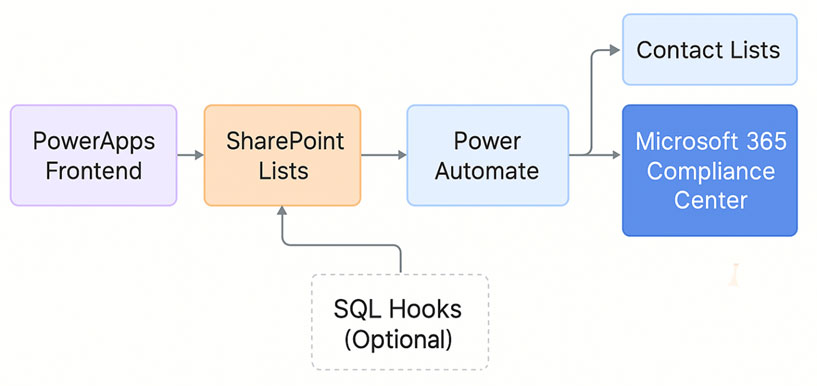
Diagram 6: Modular system architecture powering SharePoint-based OSRP planning
Key Architectural Components:
✔ User Interface Layer:
PowerApps-based forms customized for each review stage (Primary, Secondary, Resubmission, Final) allow intuitive and role-specific data entry.
✔ Workflow Engine:
Power Automate manages review sequences, triggers notification emails, generates correspondence letters, and updates status fields in real time.
✔ Data Management Layer:
SharePoint Lists store reviewer inputs, track plan status, and enforce metadata structures required for audits and process visibility.
✔ Compliance & Access Control:
Permissions are configured to restrict access by role and function. DOE-compliant policies are enforced through Microsoft 365’s Security & Compliance Center.
✔ Collaboration Layer:
Contact Lists and SharePoint Groups manage task assignments and ensure proper clearance flows across reviewers and leadership.
Technical Features Delivered
- Process Automation & Notifications
- Implemented dynamic routing and approvals via Power Automate
- Configured auto-generation of MS Word letters and email alerts tied to reviewer actions
- Role-Based Data Collection
- Delivered tailored PowerApps forms based on review stage, with logic controls and prefilled data
- Linked all forms to the centralized Priority Table for status updates and sorting
- Audit Readiness & Metadata Governance
- Structured data using standardized fields and taxonomy
- Enabled version tracking, user logging, and compliance documentation for DOE/ Prime Contractor environments
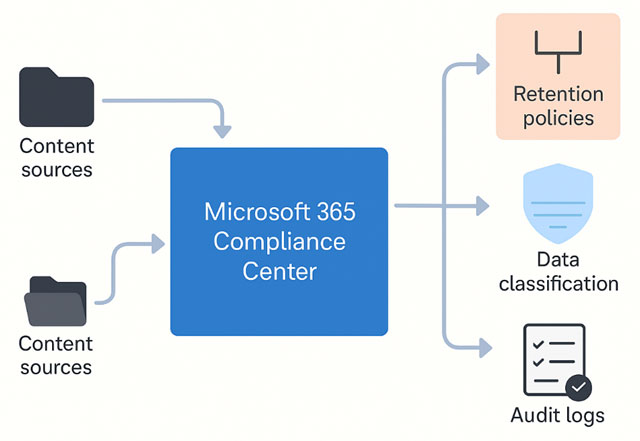
Diagram 7: Example Metadata governance and retention strategy flow aligned with Microsoft 365
- Seamless Transition from Test to Production
- Migrated solution with zero disruption, maintaining full form and workflow fidelity
- Validated through stakeholder walkthroughs and testing cycles
Key Deliverables
✅ Centralized Review Platform:
Unified interface for all review stages and clearance actions
✅ Automated Workflows:
Reduced delays and human error by eliminating manual routing and flagging
✅ Priority Table Dashboard:
Live tracking of plan status, reviewer progress, and clearance triggers
✅ Documentation & Training Materials:
Delivered system diagrams, workflow maps, and user onboarding content
Benefits Realized by the Transportation Safety Agency
✔ Operational Efficiency:
Digitized workflows reduced plan processing time and removed ambiguity in reviewer responsibilities
✔ Improved Accuracy & Visibility:
Form inputs are directly mapped to centralized tracking tables with audit-ready metadata
✔ Audit Compliance:
The system aligns with DOE infrastructure policies and prepares the Transportation Safety Agency for internal or external reviews
✔ Scalability for Future Needs:
Modular architecture allows the same model to be expanded to other emergency workflows or agencies
Conclusion
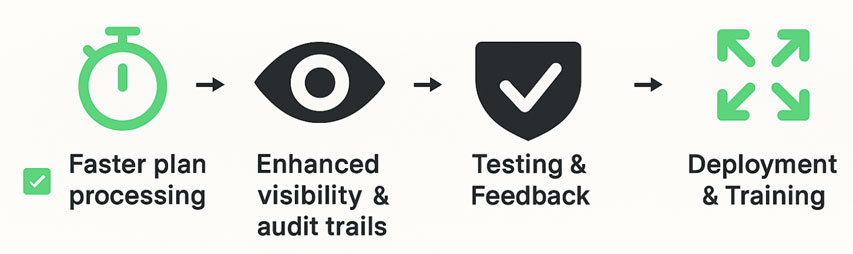
Diagram 8: Visual summary of outcomes, Efficiency, Visibility, Compliance, and Scalability
Zirlen Technologies successfully delivered a scalable, secure, and fully modernized SharePoint-based review platform for the Transportation Safety Agency’s rail spill response planning operations. The cloud-native solution eliminated manual processes, automated multi-stage review workflows, and improved collaboration across the Transportation Safety Agency and Prime Contractor stakeholders.
By leveraging Microsoft 365 tools like PowerApps, Power Automate, and SharePoint Online, the platform enhanced workflow integrity, ensured metadata-driven tracking, and enabled real-time clearance coordination, all within a secure, DOE-compliant environment.
With this digital foundation in place, the Transportation Safety Agency now benefits from faster plan processing, real-time notifications, centralized status visibility, and robust audit preparedness. The architecture is designed for long-term scalability, allowing future expansion to other emergency planning workflows or programs.
This implementation marks a significant step forward in the Transportation Safety Agency’s digital transformation journey, aligning with modernization goals while improving operational readiness and internal accountability.
The foundation set by this implementation paves the way for future innovations, including AI-assisted risk prioritization, predictive workflow triggers, and intelligent compliance automation, ensuring that the Transportation Safety Agency remains at the forefront of digital transformation in safety planning and emergency response operations.