
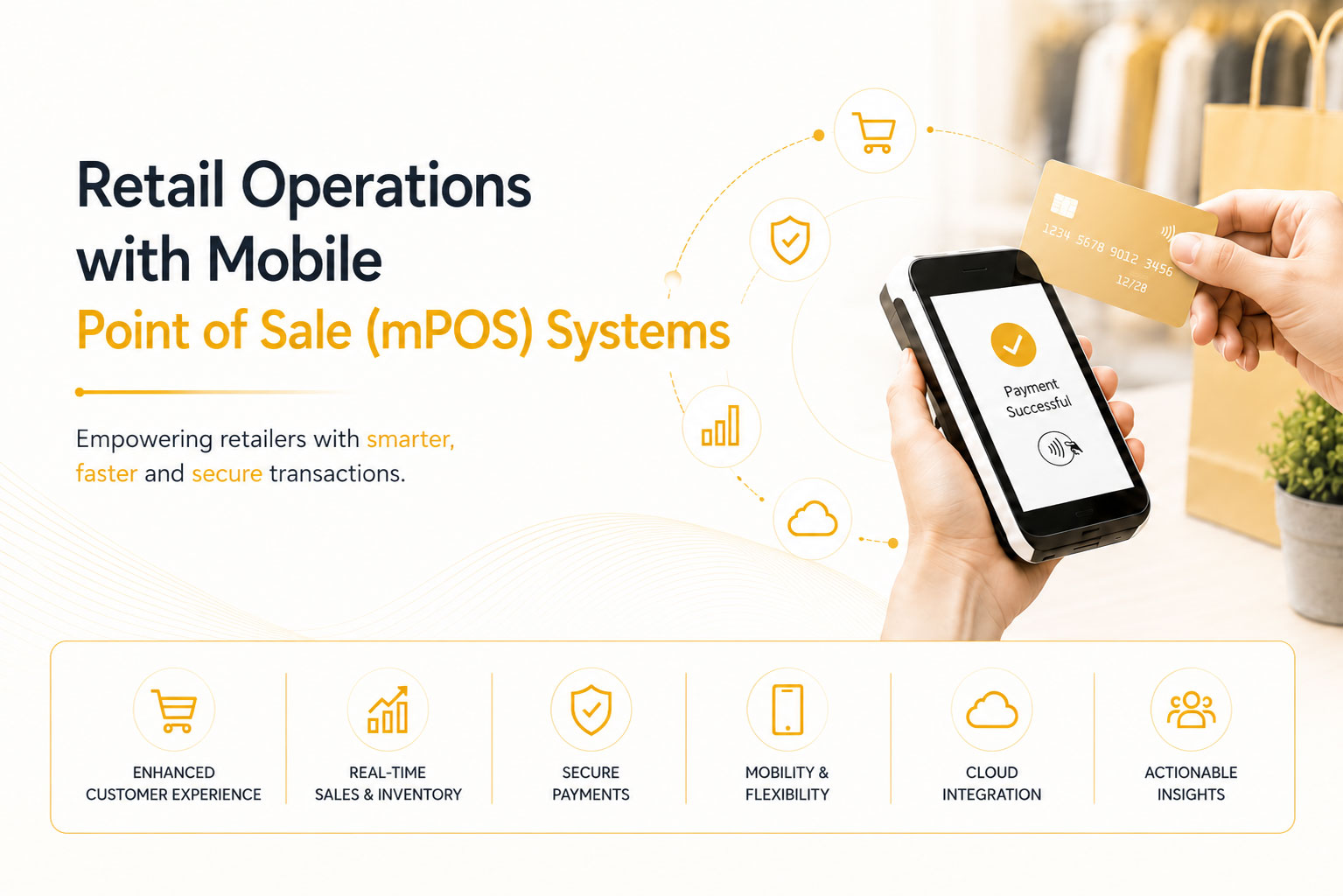
Retail Operations with Mobile Point of Sale (mPOS) Systems
Client Overview
POS is for a mid-sized retail enterprise specializing in electronics. With multiple locations, they cater to a diverse customer base. Their primary focus is on delivering exceptional in-store experiences while optimizing operational efficiency.
Industry: POS, US
Industry: Retail/Electronics
Size: Mid-sized enterprise with multiple locations
Background
POS, US identified significant challenges with their traditional fixed-point-of-sale systems:
- Checkout Bottlenecks: Long queues during peak hours led to customer dissatisfaction and potential revenue loss.
- Limited Mobility: Staff were unable to assist customers effectively on the sales floor.
- Disconnected Customer Experience: Lack of real-time inventory and product information frustrated customers and limited sales opportunities.
Project Objective
The implementation of the mPOS system was structured into the following phases to ensure a seamless transformation:
Project Overview
The project was structured into the following six critical phases:
Phase 1: Needs Assessment and Planning
- Conducted a comprehensive review of the existing point-of-sale systems.
- Identified key bottlenecks and areas for improvement.
- Established clear objectives and success metrics for the mPOS rollout.
Phase 2: Platform Selection and Customization
- Selected a scalable and user-friendly mPOS platform.
- Customized the solution to integrate with the client’s inventory and CRM systems.
Phase 3: Deployment and Training
- Deployed the mPOS devices across all store locations.
- Delivered extensive staff training sessions to ensure familiarity with the new system.
Phase 4: Integration and Testing
- Integrated the mPOS system with inventory management and CRM platforms.
- Conducted rigorous testing, including:
- Stress Testing: Simulated peak-hour loads to ensure system stability.
- User Acceptance Testing (UAT): Involved store managers to validate system usability and functionality.
- Addressed identified issues during the rework phase, such as optimizing API calls and increasing server throughput for real-time updates.
- Customer Journey Workflow:
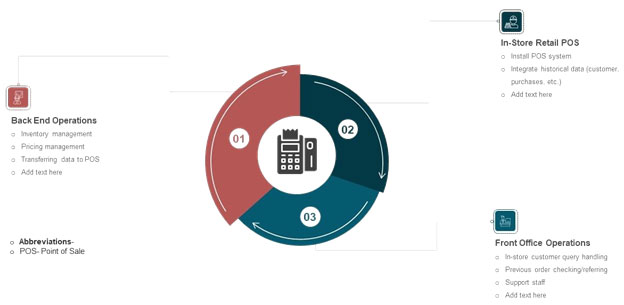
Illustrates the streamlined customer journey, from product search to checkout, enabled by the mPOS system
- Validation and Rework Path:

Depicts the validation loop during testing, ensuring robust integration and iterative improvements
Phase 5: Go-Live and Monitoring
- Launched the mPOS system in a phased approach to minimize disruption.
- Monitored system performance and collected feedback for continuous improvement
Technical Flow Diagram

Optimized mPOS implementation lifecycle: from assessment to go-live, ensuring rigorous validation, seamless integration, continuous feedback, and enhanced in-store operations.
Solution
To address these challenges, POS, US partnered with Zirlen Technologies to implement a cutting-edge mPOS system. The solution included the following components:
- Selection of mPOS Platform
POS, US chose a scalable and user-friendly mPOS platform that seamlessly integrated with existing inventory and customer relationship management (CRM) systems.
- Staff Training
Comprehensive training sessions were conducted to familiarize staff with the mPOS devices, enabling them to deliver enhanced customer service.
- System Integration
The mPOS system was integrated with:
- Inventory Management Systems: Real-time product availability was ensured using RESTful APIs and middleware platforms like MuleSoft, enabling seamless synchronization of inventory data across stores.
- CRM Platforms: Middleware connected the mPOS system to existing CRM systems, allowing personalized customer interactions.
- Middleware and Cloud Services: The project utilized Azure functions for event-driven architecture, enabling real-time updates between the mPOS devices and the central inventory system. Additionally, Azure SQL Database was used to store transactional data securely.
- Customer-Facing Features
The mPOS devices included:
- Digital receipts.
- Personalized offers.
- Loyalty program integration.
- Coupons & Promotions
- Shopping Lists
- Payment Flexibility
The system supported a variety of payment methods, including:
- Contactless payments.
- Mobile wallets (Android & IOS).
- Traditional credit and debit cards.
Reference Diagram
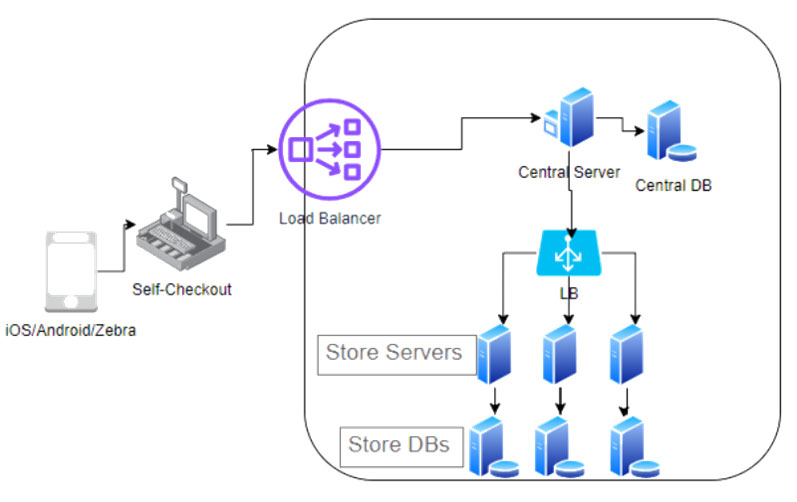
Illustration of the mPOS system, integrating self-checkout, central servers, and store-specific databases.
Results
The mPOS system implementation yielded significant results:
- Reduced Checkout Times: Streamlined transactions reduced peak-hour queues, improving customer satisfaction.
- Enhanced Staff Mobility: Staff could assist customers anywhere in the store, fostering a more personalized shopping experience.
- Real-Time Inventory Visibility: Improved inventory management minimized stockouts and optimized replenishment processes.
- Increased Sales Opportunities: Staff were empowered to close sales on the spot, driving upselling and cross-selling opportunities.
- Improved Customer Loyalty: Loyalty programs and personalized offers increased customer retention.
- Scalability and Future Technologies
- The mPOS system is designed to scale with the company’s growth, supporting new store locations and integrations.
- It lays the foundation for adopting emerging technologies, such as AI-driven customer recommendations and IoT-enabled inventory tracking.
Lessons Learned
- User Feedback Incorporation: Feedback revealed challenges with real-time inventory updates, which were addressed by optimizing API performance and middleware configurations.
- Scalability: A scalable mPOS solution ensured adaptability to the growing needs of POS, US.
- Security Considerations: Robust payment security measures-maintained customer trust and industry compliance.
- Ongoing Support: Continuous support from the mPOS provider ensured system reliability and addressed emerging challenges.
- Enhanced User Training: Early feedback highlighted gaps in staff readiness, prompting additional hands-on training sessions that improved adoption rates.
- Auditing: Age restriction auditing, random auditing based up on system/custom algorithms.
Specialties
Self-Scanning , Self-Service, omni-channel retailing, Mobile Shopping, Customer Experience, , Retail innovations, Mobile Payment, Software, Retail Technology, Machine Learning and Customer Engagement.
Conclusion
The successful implementation of the Mobile Point of Sale system at POS, US revolutionized their in-store operations. Checkout times were reduced, staff mobility improved, and customer satisfaction reached new heights. This transformation has positioned POS, US as a competitive and agile player in the retail electronics market.
By adopting innovative technologies like mPOS, POS, US has gained a strategic edge, enhancing adaptability, customer insights, and readiness for future retail trends such as AI and IoT integrations. This positions the company as a forward-thinking leader in retail technology.